Edition #1 | Weekly Sustainability Briefing

Get This in Your Inbox Every Week.
Like what you read? Get it delivered. Every week, our newsletter brings you the same business-focused sustainability briefing, straight to your inbox. Subscribe below and stay ahead.
Estimated reading time: 7 minutes
Weather risk · Carbon market integrity · Net zero under pressure
Welcome to your weekly sustainability briefing! We’re glad you’re here. This week, we’re covering three developments that are reshaping how businesses think about climate risk, carbon markets, and the politics of the green transition. The WMO has launched a $100 million initiative to strengthen global climate forecasting infrastructure, and the business case behind it is hard to ignore. Indigenous-backed carbon credits are quietly becoming the voluntary carbon market’s highest-integrity assets, and the opportunity for companies to get ahead of that shift is now. In the UK, rising energy bills are turning net zero into a ballot box issue; a warning signal for every market navigating the tension between climate ambition and cost-of-living pressure. Read on for what moved this week and what it means for your business.
Story #1: Why Weather Data Is the New Economic Intelligence
The WMO launched a $100M global fund towards weather forecasting
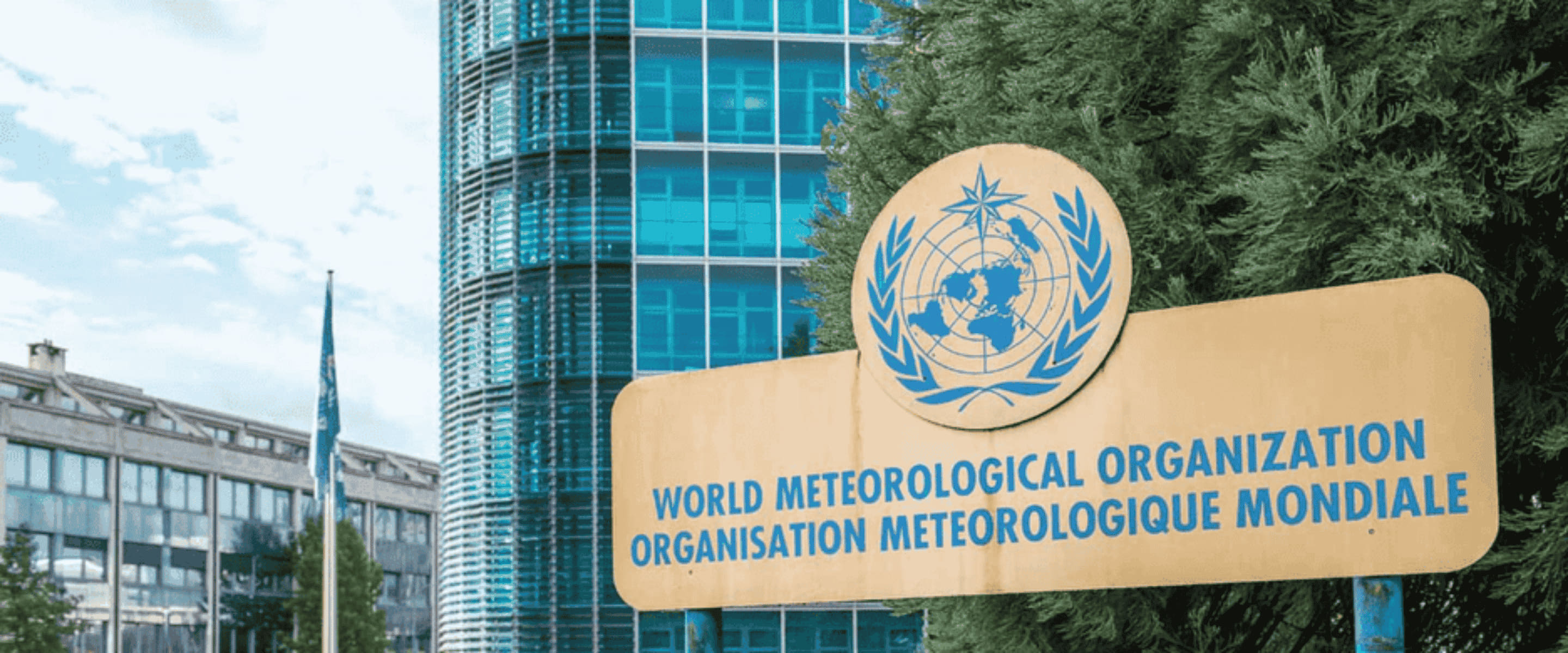
The World Meteorological Organization has officially launched a new financing mechanism; the WMO Weather, Climate and Water Intelligence Commons (“WMO Commons”). Seeking to mobilize at least $100 million over five years to finance global weather, climate, and water monitoring, prediction, and service delivery systems. The launch was made at a senior-level roundtable during Climate Week Zurich, with financial, business, and government leaders in attendance.
In 2024 alone, weather and climate-related catastrophes caused $318 billion in global losses, of which only 43% were insured. WMO Secretary-General Celeste Saulo framed the issue directly:
“Climate risk is increasingly expressed through weather. And weather risk is rapidly translating into economic risk.”
| Business Impact Underinvesting in forecasting infrastructure for storms, floods, droughts, heatwaves, and wildfires is creating major economic and operational risks, disrupting supply chains, reducing productivity, increasing insurance losses, and straining public finances. The WMO argues that weather and climate intelligence has become a critical form of economic intelligence, meaning companies relying on outdated forecasting data are exposing themselves to significant risk. What Businesses Can Do: • Integrate physical climate risk metrics into financial reporting to meet growing disclosure requirements such as CSRD, SEC, and ISSB standards. Review and strengthen climate data inputs to ensure that supply chain, logistics, and asset risk models use real-time, high-quality meteorological data rather than outdated historical averages. •Engage with the WMO Commons initiative to gain early access to advanced forecasting intelligence and position the company as a leader in climate resilience. • Treat weather risk as investor intelligence, using resilient operations and forecasting capabilities to improve insurer confidence and secure stronger access to capital markets. |
Story #2: Indigenous Rights and the Market Opportunity
The global mining boom is exposing deep failures in Indigenous rights protections

The US lithium boom is advancing on Native American ancestral lands under a 19th-century mining law that still does not require the federal government to consult tribes before projects proceed. Tribal consultation often remains discretionary and occurs too late, leaving tribes with little power to influence project outcomes.
The contrast with other countries is significant: In New Zealand, Māori rights and treaty principles are built into statutes governing land and resource decisions. Since 1975, a government commission has led roughly 100 settlements with Māori tribes; including financial compensation, recognition of cultural sites, land transfers, and partnerships to co-manage natural resources. In Canada, "meaningful consultation" and "accommodation" before advancing mining projects is required by law, and British Columbia has codified a UN declaration affirming Indigenous peoples' rights to culture, land, and self-determination.
Business Impact The gap between how the US and other countries handle Indigenous consultation is becoming a material business risk. Courts in Norway, Canada, and New Zealand have invalidated projects retroactively for failing to meet consultation standards. But beyond risk, there is a more important point: companies that engage Indigenous communities early, honestly, and on equal terms tend to build more resilient projects. Integra Resources' agreement with the Shoshone-Paiute tribe is an example of what it looks like when respect for rights and business outcomes are treated as compatible rather than competing. The same logic applies to carbon markets: Indigenous-managed territories hold some of the world's most biodiverse and carbon-rich ecosystems, and credits tied to Indigenous-led stewardship are gaining recognition precisely because they reflect genuine community benefit, as an additional benefit to carbon accounting. What Businesses Can Do: • Engage communities early and meaningfully, before projects are designed, not after, is both the ethical standard and the one that produces better outcomes for all parties. • If purchasing carbon credits, prioritize projects certified under standards that require genuine Indigenous participation and benefit-sharing, such as CCBS, Plan Vivo, and ART TREES. The value of these credits comes from the integrity of the relationships behind them. • Audit supply chains for exposure to Indigenous land rights risks, particularly in critical minerals. Understand where your inputs come from, and who has rights over that land. |
Story #3: The Cost of Going Green... Politically Speaking
The UK's energy affordability crisis is becoming a political flashpoint

Ahead of the UK's May 2026 local elections, energy bills have become one of the most politically charged issues on the ballot. Rising energy costs remain one of the biggest concerns for UK households in 2026, with global oil and gas prices fluctuating due to geopolitical tensions, driving up wholesale energy costs. The debate has split sharply along political lines, with Labour defending its long-term clean energy transition strategy and Reform UK calling for the immediate rollback of renewable subsidies, fracking licences, and net-zero commitments.
Reform UK wants to scrap government contracts widely acknowledged to be making UK wind and solar the country's cheapest forms of energy, and would trade thousands of green jobs for a final few years of fossil fuel profits. Meanwhile, the Conservatives have completely dropped their commitment to Net Zero by 2050 and pledged to repeal the Climate Change Act. The political atmosphere reflects a broader public frustration: a majority of voters say either that the state should help everyone with rising gas and electricity bills, or restrict support only to households up to a certain income threshold, including their own.
| Business Impact The UK debate is a reminder that fossil fuel dependency is what makes businesses vulnerable to energy price shocks. Global gas market volatility, driven by geopolitical tensions and supply disruptions, is the primary reason energy bills have surged, and renewable energy offers price stability precisely because it isn't exposed to those same international markets. Wind and solar are widely acknowledged as the UK's cheapest sources of electricity, and the companies that have already invested in clean energy infrastructure, through power purchase agreements, on-site generation, or efficiency upgrades, are seeing lower, more predictable costs as a result. The political noise around net zero is real, but the underlying economics are not on the side of fossil fuels. For businesses with long-term investment horizons, the risk isn't clean energy. The risk is staying exposed to the volatility that clean energy is designed to replace. What Businesses Can Do • Reduce reliance on government policy by investing directly in renewable energy, energy efficiency, and on-site generation. • Show clear data on how clean energy investments lower costs and improve competitiveness. • Accelerate energy efficiency projects to reduce exposure to volatile energy prices in any political scenario. • Prepare investors for policy uncertainty by diversifying sustainability strategies and documenting contingency plans in ESG reporting. |
The developments in this edition reflect a market that is moving fast, and rewarding the businesses that move with it. If any of this week's stories raised questions about your organization's climate strategy, carbon commitments, or regulatory exposure, CarbonBetter is here to help you work through them. Get in touch with our team and let's talk about where you stand. And if you found this briefing useful, subscribe to our weekly newsletter with the same analysis, business impact guidance, and the sustainability insights your team needs to stay ahead, directly into your inbox.