Edition #12 | Your Sustainability Team’s Weekly Briefing
Get This in Your Inbox Every Week.
Like what you read? Get it delivered. Every week, our newsletter brings you the same business-focused sustainability briefing, straight to your inbox. Subscribe below and stay ahead.
Estimated reading time: 7 minutes
Carbon Credit Verification · Insurers & Climate Risk · Data Centers Hit a Wall
Welcome to your weekly sustainability briefing. This week, we’re covering three developments that show how the ground is shifting under both climate risk and climate credibility; New York just became the first state in the country to pause permits for large-scale data centers, forcing a reckoning between the AI boom’s energy and water demands and the grid capacity to support it. Insurers are retreating from entire regions as climate losses outpace their models, a warning sign for any business with physical assets in a high-risk zone, and a preview of how climate risk is starting to reshape financing and valuations well beyond the insurance industry itself. And the ICVCM’s Core Carbon Principles are becoming the de facto quality standard for carbon credits, with 98% of market volume now under some form of verification, right as CarbonBetter’s VCM Outlook Chapter 2 breaks down what actually separates the major carbon registries and why that distinction is starting to matter more than ever.
Story #1: The ICVCM Core Carbon Principles Are Becoming the Market’s Quality Standard
98% of market volume is now CCP-eligible
The Integrity Council for the Voluntary Carbon Market (ICVCM) set out to fix a trust problem in the VCM where too many credits on the market don’t represent real, verifiable climate impact. Its solution is the Core Carbon Principles (CCP) label, a two-tier verification system. First, a carbon-crediting program (like Verra or Gold Standard) must become “CCP-Eligible” by meeting ICVCM’s governance, tracking, and transparency standards. Then, individual methodologies within that program must be assessed and approved as “CCP-Approved” before credits generated under them can carry the CCP label. As of late 2025, programs covering roughly 98% of market volume have become CCP-Eligible, and more than 30 methodologies spanning nature-based projects, methane destruction, and engineered removals have been approved.
A large share of credits currently on the market are considered high-risk, and many major corporates have purchased low-impact projects in the past. Regulatory pressure is compounding this, for example, new EU rules will restrict vague “climate neutral” style claims starting in late 2026, and disclosure assurance requirements are tightening what counts as audit-ready evidence for climate claims more broadly. Together, this is pushing companies toward more rigorous, verifiable standards for any carbon credit used in a public climate claim.
| Business Impact For companies buying carbon credits, this changes what "doing due diligence" looks like. A credit's registry listing is no longer enough on its own, you must verify the program and methodology carry the CCP label, because that's what demonstrates the credit meets a recognized quality threshold rather than just a registry's own internal criteria. What businesses can do: • Review your current or planned credit portfolio against the CCP label tracker to identify which holdings are CCP-Eligible/Approved versus not yet assessed. • In public disclosures, state your quality benchmark explicitly (e.g., "we apply ICVCM Core Carbon Principles as our quality standard") rather than making unqualified "high-quality" claims. • If marketing to EU audiences, review all "climate neutral," "carbon neutral," or similar claims now, ahead of the September 2026 enforcement date. • Document your due diligence process, registry screenshots, ICVCM assessment status, and a portfolio-to-category mapping, so it's audit-ready if challenged. For a deeper walkthrough of how registries and verification actually work, CarbonBetter's latest analysis, Intro to Carbon Offset Registries, is a useful starting point for teams building out this due diligence process. |
Story #2: Climate Losses Are Outpacing Insurers' Models
Rising, harder-to-predict climate losses are pushing insurers to retreat from high-risk regions

Insurers are retreating from regions facing repeated catastrophes like wildfires or floods, as losses become unsustainable. California is a clear example, where several major insurers stopped offering home insurance in wildfire-prone areas, prompting state regulators to intervene with new rules to maintain coverage. This isn't limited to homeowners: the same dynamic is playing out for commercial property, manufacturing facilities, hospitality assets, and any business with physical infrastructure in a high-risk zone. As coverage becomes harder to secure or dramatically more expensive, companies face a cascading set of business problems. Insurance is typically a condition of financing, so a coverage gap can restrict access to capital, complicate refinancing, and depress asset valuations.
This is part of a broader trend toward a growing "protection gap," where climate-exposed businesses and communities struggle to obtain affordable insurance at all. Insured losses from natural catastrophes have exceeded $100 billion annually for six consecutive years, a historically unprecedented run. Simply raising premiums isn't a sustainable fix either, since excessive rates can drive customers away entirely or make coverage impractical, leaving businesses to self-insure or absorb losses directly.
Business Impact This is a direct operational and financial risk for any company with physical assets in climate-exposed regions: insurance may become harder to obtain or dramatically more expensive, which has knock-on effects for financing, property values, and business continuity planning. What businesses can do: • Don't assume current insurance coverage or pricing is stable long-term, build scenario planning around potential non-renewal or steep premium hikes into your risk management strategy. • Commission a formal climate risk assessment for any physical assets in exposed regions, quantifying specific exposure to flood, wildfire, heat, or storm risk gives you a concrete basis for planning rather than reacting when a policy comes up for renewal. • Model scenario-based exposure over multiple time horizons (not just the next policy year), since insurers themselves are increasingly using this kind of longer-range modeling to make coverage decisions. • Use assessment findings to prioritize resilience investments, the adaptation measures that most directly reduce your modeled risk are usually the ones insurers will recognize with better terms. |
Story #3:New York Pauses Large Data Center Permits
An Executive Order halts environmental permits as grid strain and water use concerns collide with AI boom
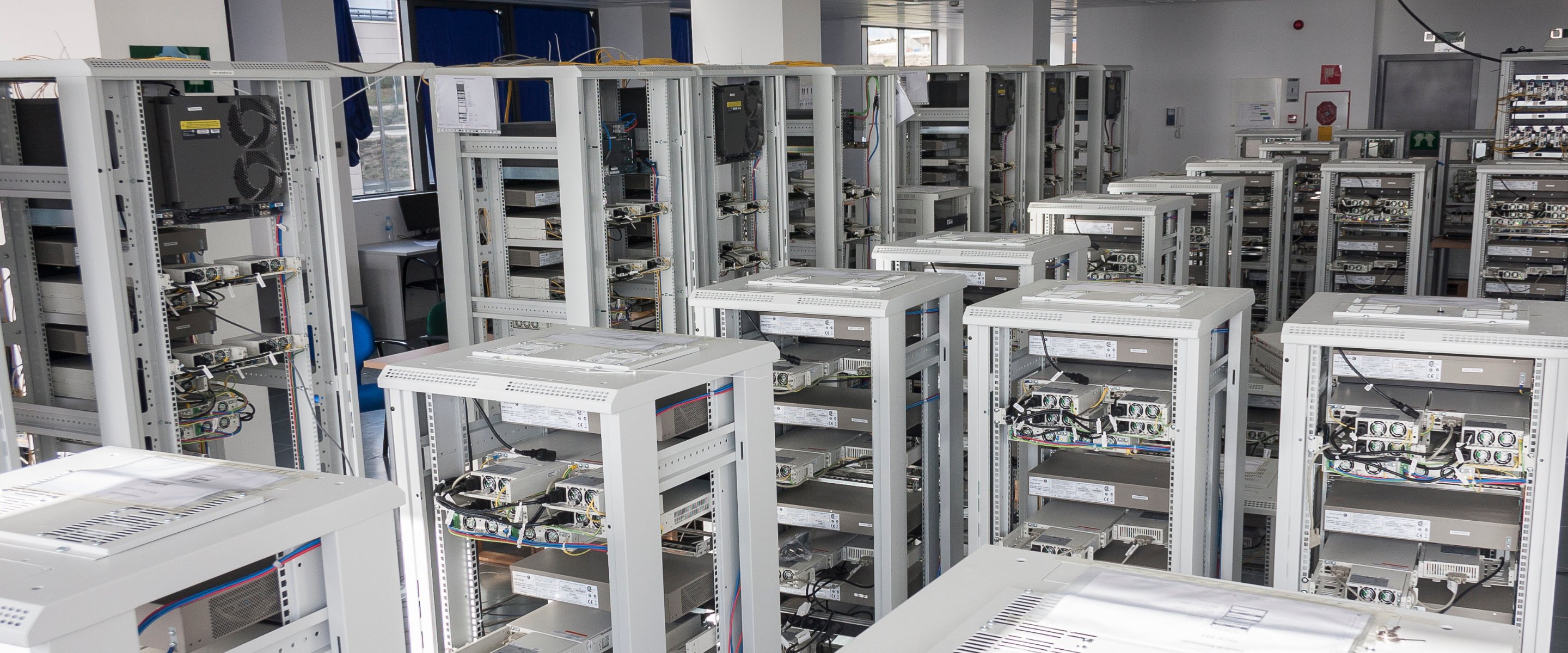
On July 14, 2026, New York became the first state to temporarily pause portions of the permitting process for large-scale data centers, defined as facilities consuming 50 megawatts or more, while it develops a broader regulatory framework, driven by more than 12 gigawatts of pending data center load interconnection requests. Governor Hochul's Executive Order directs state agencies to study and establish new regulatory frameworks addressing environmental impacts, utility costs, and community benefits, exempting projects with permits already deemed complete before July 14, 2026. It's a targeted pause on discretionary environmental permits, not a full prohibition on construction.
The order responds to New Yorkers' concerns about the impacts of data center siting and operation on energy use, water use, water quality, air quality, noise, and other environmental factors, and notes that existing regulatory frameworks aren't yet prepared to address the large-scale water use and treatment that data centers require, which could strain aquifers and surface waters. This isn't isolated to New York, as Seattle approved a similar one-year moratorium on data centers of 20MW or more in June 2026, and Monterey Park, CA voters passed a ballot measure prohibiting data centers citywide.
| Business Impact This signals a turning point where AI-driven data center expansion is colliding directly with grid capacity, water availability, and community pushback, forcing states to treat data centers as a distinct environmental and infrastructure category requiring dedicated regulatory frameworks, not just standard industrial permitting. What businesses can do: • If your company operates or plans large-scale data center facilities, build in longer permitting timelines and budget for community benefit program requirements as a standard cost of doing business in affected states. • Companies dependent on cloud/AI infrastructure providers should ask about their providers' exposure to permitting delays in key markets, since this could affect capacity planning. • Track how other states are responding; Seattle and Monterey Park have already moved, and this pattern is likely to expand, making early awareness valuable for site selection strategy. |
The developments in this edition reflect a market that is moving fast, and rewarding the businesses that move with it. If any of this week's stories raised questions about your organization's climate strategy, carbon commitments, or regulatory exposure, CarbonBetter is here to help you work through them. Get in touch with our team and let's talk about where you stand. And if you found this briefing useful, subscribe to our weekly newsletter with the same analysis, business impact guidance, and the sustainability insights your team needs to stay ahead, directly into your inbox.