Edition #13 | Your Sustainability Team’s Weekly Briefing

Get This in Your Inbox Every Week.
Like what you read? Get it delivered. Every week, our newsletter brings you the same business-focused sustainability briefing, straight to your inbox. Subscribe below and stay ahead.
Estimated reading time: 6 minutes
Registry Integrity · SBTi Standard V2 · Carbon Removal Financing
Welcome to your weekly sustainability briefing. This week, we’re covering three developments that show how the voluntary carbon market is maturing on both credibility and structure: the Integrity Council for the Voluntary Carbon Market approved three more registries, pushing high-integrity coverage to roughly 95% of the entire market and cementing the Core Carbon Principles as the de facto quality standard buyers and regulators expect. SBTi finalized its Corporate Net-Zero Standard V2, formally recognizing carbon credits as part of a credible climate strategy for the first time — a shift that gives companies a defensible framework for how credits fit alongside their science-based targets. And new market data reveals a financing bottleneck few are talking about: most planned carbon removal capacity won’t get built without buyers signing long-term offtake agreements now, meaning demand forecasts alone won’t secure the supply companies will need in a few years.
Story #1: ICVCM Approves Three More Registries
Extending High-Integrity Coverage to 95% of the Market

The Integrity Council for the Voluntary Carbon Market approved three additional carbon crediting programs this week: BioCarbon Standard, Cercarbono, and Plan Vivo. bringing the total number of ICVCM-approved registries to 13. Cercarbono’s approval is particularly notable given its strong presence across Latin America. With this latest round, an estimated 95% of cumulative voluntary carbon market issuances now come from programs that meet ICVCM’s Core Carbon Principles, the industry’s benchmark for credit quality and integrity.
| Business Impact For buyers, this significantly lowers the cost of due diligence. A year ago, evaluating whether a registry met a credible quality bar required independent research on a program-by-program basis, often slowing procurement and adding legal or compliance analysis. With the vast majority of the market now operating under one consistent, externally vetted standard, that evaluation burden lowers. Buyers can spend less time asking "is this registry legitimate" and more time on the more strategic question of which specific projects and co-benefits align with their sustainability goals. It also reduces reputational risk tied to sourcing from unvetted programs, a growing concern as scrutiny of corporate climate claims increases. For a deeper walkthrough of how registries and verification actually work, CarbonBetter's latest analysis, Intro to Carbon Offset Registries, is a useful starting point for teams building out this due diligence process. |
Story #2: SBTi's Finalized Net-Zero Standard 2.0
Rising, harder-to-predict climate losses are pushing insurers to retreat from high-risk regions

SBTi has finalized its Corporate Net-Zero Standard Version 2.0, and the standout change for the carbon market is the introduction of "Ongoing Emissions Responsibility" (OER) a new, optional mechanism that formally recognizes the use of carbon credits, including reduction, avoidance, and removal credits, as a legitimate part of a company's climate strategy. This marks the first time SBTi has given credits this kind of explicit standing; credits used through OER are tracked and reported separately and do not count toward a company's science-based targets themselves. Validation against the new standard doesn't open until early 2027, giving companies a transition window.
Business Impact This resolves a source of hesitation that has held back some corporate buyers: uncertainty over whether purchasing credits could create friction with their science-based target commitments. Sustainability teams now have a standard-backed, defensible framework for reporting credit use to leadership, boards, and external stakeholders, rather than relying on ad hoc justifications. Companies that are setting or renewing science-based targets this year should start factoring OER into their planning now, well ahead of the 2027 validation window, so they're not scrambling to retrofit a strategy once it becomes the norm. It's also a signal of where the broader market is heading, credits are no longer in a gray area, and are now becoming a to a formally sanctioned tool. |
Story #3:Why Carbon Removal Projects Need Buyers Before They Need Builders
An Executive Order halts environmental permits as grid strain and water use concerns collide with AI boom
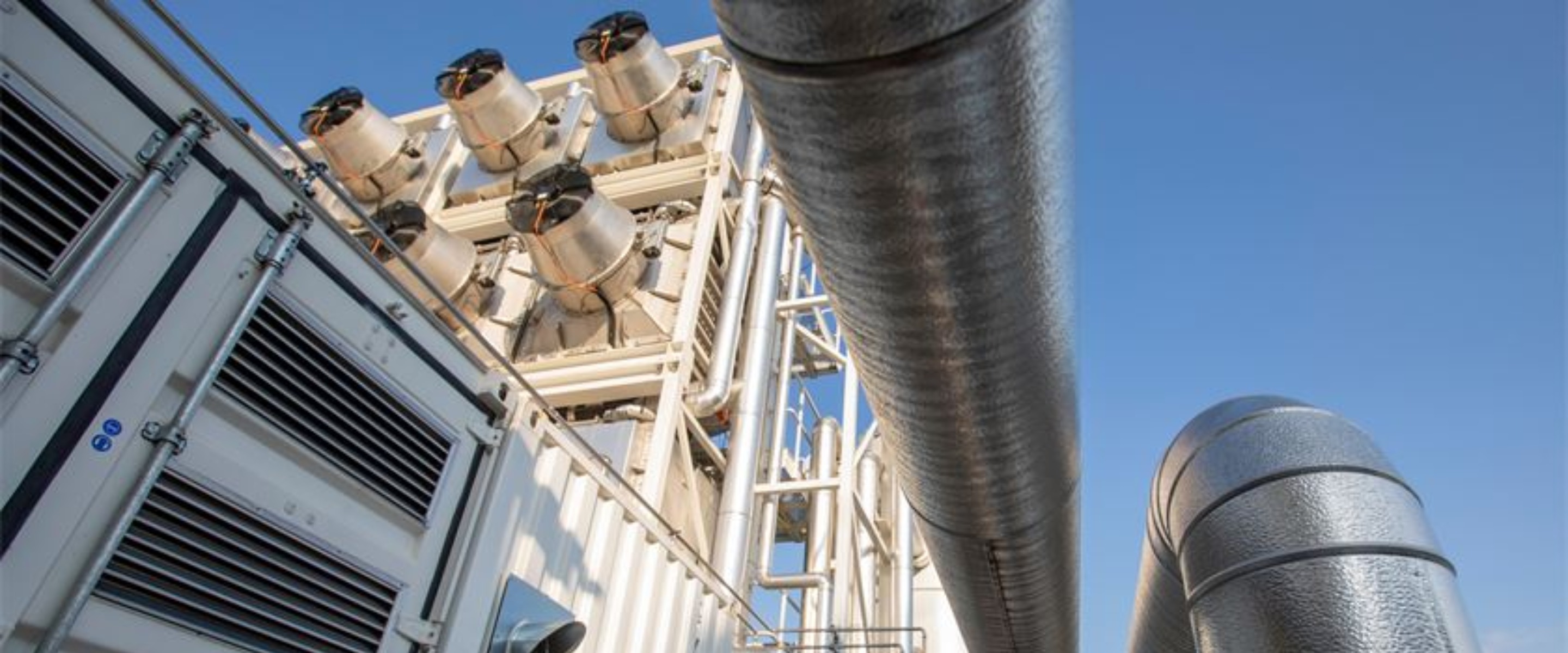
Industry data shows that the bulk of planned high-durability carbon removal capacity; including biochar, direct air capture, and geological storage projects, depends on developers securing offtake agreements before construction can begin. Without early, multi-year purchase commitments from buyers, these projects typically can't secure the financing needed to move from planning to operation, regardless of how strong long-term demand projections look on paper.
| Business Impact This shifts the calculus for any company planning to rely on removal credits in the coming years. Waiting for supply to materialize and then buying on the spot market is increasingly unrealistic for high-quality removal categories, since that supply often doesn't exist without buyers committing first. Companies that sign longer-term offtake agreements now are effectively helping decide which projects get built, and are securing their own access to a category of credit that's likely to tighten further as SBTi's new standard pushes more corporate demand specifically toward removals. This is especially relevant alongside as several of the newly ICVCM-approved methodologies, biochar in particular, are exactly the type of removal project that depends on this kind of early financing. |

BetterExplained: What is CORSIA
What Is a CORSIA Credit?
CORSIA, the Carbon Offsetting and Reduction Scheme for International Aviation, is a global program that requires airlines to offset the growth in their emissions above a set baseline. When an airline's international flights produce more emissions than their allowance permits, the airline must purchase CORSIA-eligible credits to cover the difference.
What makes a credit "CORSIA-eligible"?
Not every carbon credit qualifies. CORSIA runs its own separate eligibility assessment, distinct from labels like ICVCM's CCP designation, and only a limited set of registries and project types have been approved so far. This is a major reason CORSIA credit supply remains tight even as demand from airlines increases heading into the program's first compliance deadline.
CORSIA is one of the only mechanisms that directly connects a mandatory, government-backed compliance market to the voluntary carbon market. As the program moves through the final stretch of its first compliance phase this year, it serves as a real-world test of whether the broader VCM can supply credits at the scale and quality required by binding regulation, not just voluntary commitments. That makes it a useful bellwether for what may be expected of other industries as more compliance-driven carbon requirements emerge globally.
The developments in this edition reflect a market that is moving fast, and rewarding the businesses that move with it. If any of this week's stories raised questions about your organization's climate strategy, carbon commitments, or regulatory exposure, CarbonBetter is here to help you work through them. Get in touch with our team and let's talk about where you stand. And if you found this briefing useful, subscribe to our weekly newsletter with the same analysis, business impact guidance, and the sustainability insights your team needs to stay ahead, directly into your inbox.