Edition #14 | Your Sustainability Team’s Weekly Briefing

Get This in Your Inbox Every Week.
Like what you read? Get it delivered. Every week, our newsletter brings you the same business-focused sustainability briefing, straight to your inbox. Subscribe below and stay ahead.
Estimated reading time: 9 minutes
Global Power Mix · Carbon Market Infrastructure · EU Emissions Trajectory
Welcome to your weekly sustainability briefing. This week, we’re covering three developments that show decarbonization moving from ambition to measurable reality: renewables crossed a third of global electricity generation for the first time in 2025, overtaking coal, driven by a historic reversal in fossil power use across China and India, the world’s two largest fossil power markets. Carbon markets kept building the infrastructure to earn lasting trust, with the World Bank counting 87 active carbon pricing systems worldwide and registries like ACR launching new platforms and methodologies designed to raise the bar on credit quality. And the EU’s emissions trading system posted another year of decline, cutting covered emissions 1.3% in 2025 and keeping the bloc on track for its 2030 target, real-world proof that a major economy can keep growing while its emissions keep falling.
Story #1: Renewables Cross the One-Third Mark
Renewables surpassed a third of global electricity generation in 2025

For the first time on record, renewables generated more than a third of the world’s electricity in 2025, overtaking coal as a power source. Global renewable capacity additions hit a record 800 gigawatts, almost triple what the world was adding a decade ago, and battery storage was the fastest-growing power technology, up around 40% to nearly 110 GW. Batteries are what let renewables actually displace fossil generation around the clock, rather than just supplementing it during sunny or windy hours. It’s also, notably, more new capacity than natural gas added in the same period, a sector that’s usually treated as the “reliable” fallback.
The most consequential piece, though, is geographic: China and India, the two largest fossil power markets on the planet, both saw a historic reversal in fossil generation trends in 2025. These are the countries where global decarbonization was widely expected to be hardest and slowest, given their scale of coal-fired infrastructure and continuing energy demand growth.
| Business Impact If your company has electricity-heavy operations, manufacturing, or key suppliers based in China, India, or similar fast-transitioning grids, your Scope 2 emissions profile may already be improving faster than your reporting reflects; most companies still rely on grid emissions factors that lag real-world changes by a year or more. This also has direct procurement implications: renewable power purchase agreements (PPAs) and storage-backed contracts, which used to be limited or expensive in coal-dependent markets, are becoming more available and more price-competitive as the underlying grid mix shifts. For companies setting science-based targets or SBTi commitments, faster grid decarbonization in these regions can also meaningfully change your baseline trajectory and how aggressive your remaining reduction targets need to be. Actionable step: Pull your most recent Scope 2 location-based emissions calculations for any operations or major suppliers in Asia and check the vintage of the grid emissions factors being used; if they're more than a year or two old, they're likely overstating your actual footprint. If renewable procurement in these markets hasn't been part of your energy strategy because it seemed premature, this is a good moment to revisit that assumption with your energy or sustainability team. |
Story #2: Carbon Markets Get More Rigorous
Carbon markets added infrastructure and integrity milestones

While headline emissions numbers get the attention, a more important story might be happening underneath them: the infrastructure of carbon markets is maturing in ways that make the whole system more credible and durable. The World Bank's 2026 report on carbon pricing counted 87 active carbon pricing tools globally (a mix of emissions trading systems and carbon taxes) now covering about 29% of global greenhouse gas emissions and generating roughly $107 billion in government revenue in 2025. That's a meaningful jump in both coverage and legitimacy; a decade ago, carbon pricing was a patchwork of pilot programs in a handful of regions. Today it's a mainstream policy tool spanning nearly a third of global emissions.
On the voluntary market side, the trend is toward institutional credibility rather than growth for its own sake. The American Carbon Registry (ACR) launched a new registry platform in partnership with Intercontinental Exchange (ICE), the same infrastructure operator behind major financial exchanges, which signals carbon credits are increasingly being treated with the same rigor and transaction standards as other financial assets. ACR also published an updated Carbon Capture and Storage methodology and released the first sectoral crediting approach specifically for the electric power sector, both aimed at closing methodology gaps that have historically made critics skeptical of offset quality. This is the unglamorous infrastructure work that determines how the voluntary carbon markets thrives in the next decade.
Business Impact As registries adopt ICVCM Core Carbon Principles and integrate with established financial infrastructure like ICE, credits transacting through them become measurably lower-risk to use in public net-zero claims, this matters enormously if your company relies on offsets as part of an interim or long-term climate strategy, since greenwashing scrutiny on low-quality credits has only intensified. At the same time, this professionalization raises the bar: credits purchased years ago under older, unreviewed methodologies may become harder to defend publicly even if they were considered legitimate at the time. Companies that get ahead of this shift, auditing their credit portfolio for CCP-alignment now, will be in a stronger position than those that wait for someone to ask of them. Actionable step: If your company holds or is planning to purchase voluntary carbon credits, check whether the registry and specific methodology behind them carry ICVCM CCP-approval status. If they don't, start sourcing conversations now with registries or project developers that do, quality expectations are only going to tighten from here, and switching costs are lower before a claim is already public. |
Story #3:The EU's Emissions Keep Falling
The EU's emissions trading system cut covered emissions another 1.3%
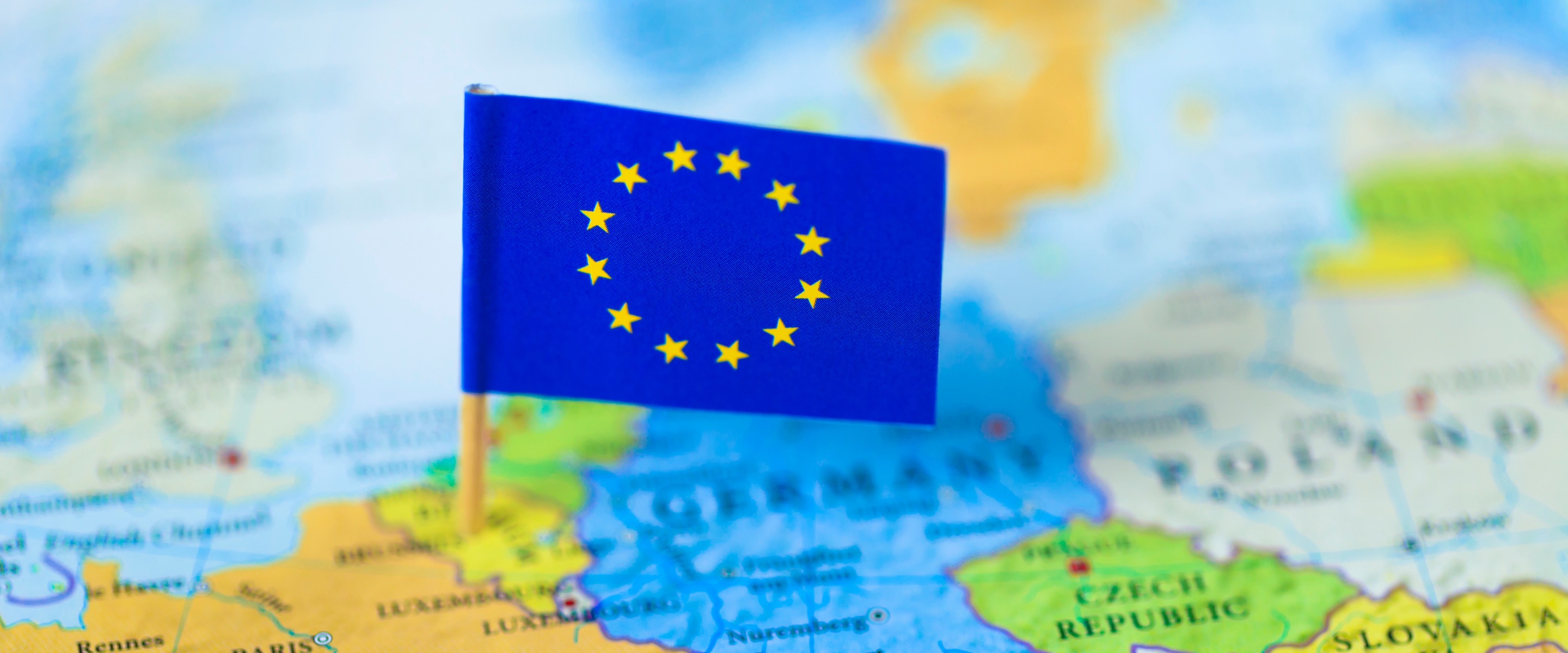
The EU Emissions Trading System, the world's largest and longest-running compliance carbon market, posted a 1.3% emissions decline in 2025, extending a trend that has now cut covered emissions in half since 2005. Based on data reported by member states through March 2026, the bloc remains on track for its 2030 target of a 62% reduction. Zooming out further, the EU has cut total greenhouse gas emissions by more than 37% since 1990 (39% excluding international aviation and shipping) while growing its economy by 71% over the same period — one of the clearest real-world demonstrations that emissions reduction and economic growth are not mutually exclusive at a continental scale.
Fossil fuel combustion emissions from power generation fell 0.4% in 2025 even as net electricity generation grew 1.7%, meaning the EU is generating more electricity with a cleaner mix, not less electricity overall. Solar was the standout, posting a 24.6% year-over-year increase and pushing renewables' share of the power mix up to 47.3%. Some independent assessments, including from the European Environment Agency and Climate Action Tracker, flag that the EU may land just under its legally binding 55% net emissions target, and that political pressure is building in the 2026 ETS and methane regulation review to soften some requirements citing energy costs and competitiveness concerns.
| Business Impact For any company facing internal skepticism about the cost of climate investment, the EU's growth-emissions decoupling is one of the most credible large-scale counterexamples available, it's not a projection or a pilot program, it's 35 years of real economic data. For companies operating in the EU or sourcing from EU-based suppliers, the steady, predictable decline in ETS emissions also reinforces that carbon costs under the system are a structural, long-term feature of doing business there, not a temporary policy that's likely to be rolled back, even with current political pressure to ease near-term terms. Actionable step: If your company has EU operations or EU-based suppliers, make sure long-term cost forecasting treats continued ETS price exposure as a baseline assumption rather than a variable that might disappear. It's also worth flagging the 2026 ETS and methane review to your policy or government affairs team as a "stay engaged" moment, the direction of travel is still toward tightening, but the outcome of this specific review isn't locked in yet. |
BetterExplained: Compliance vs Voluntary Carbon Markets
This week's stories touch both types of carbon markets, and the distinction confuses people up constantly enough that it's worth a plain-language breakdown.
Compliance markets are government-mandated, the EU ETS is the largest and clearest example: companies in covered sectors (power generation, heavy industry, aviation, and increasingly maritime) are legally required to hold one emissions allowance for every ton of CO2 they emit. If a company emits more than it holds allowances for, it faces financial penalties. This legal enforcement is exactly why EU ETS emissions data is such a reliable decarbonization indicator: companies aren't reducing emissions because it's good for their image, they're doing it because the alternative is a direct cost to the business.
Voluntary markets are opt-in. No law requires a company to participate, instead, companies purchase carbon credits by funding projects like reforestation, methane capture, renewable energy, or direct carbon removal, to offset emissions they haven't yet eliminated, typically as part of a net-zero or interim climate commitment. Because there's no legal enforcement mechanism behind voluntary credits, the entire system depends on trust: rigorous methodologies, independent verification, and credible registries are what stand in for the law. That's exactly what this week's ACR and World Bank developments are about, building the kind of infrastructure and standards that let voluntary credits earn the same confidence compliance markets get automatically from regulation.
The simplest way to remember the distinction: compliance markets exist because the law requires it and voluntary markets exist because companies choose them as a tool to decarbonization.
The developments in this edition reflect a market that is moving fast, and rewarding the businesses that move with it. If any of this week's stories raised questions about your organization's climate strategy, carbon commitments, or regulatory exposure, CarbonBetter is here to help you work through them. Get in touch with our team and let's talk about where you stand. And if you found this briefing useful, subscribe to our weekly newsletter with the same analysis, business impact guidance, and the sustainability insights your team needs to stay ahead, directly into your inbox.