Edition #16 | Your Sustainability Team’s Weekly Briefing

Get This in Your Inbox Every Week.
Like what you read? Get it delivered. Every week, our newsletter brings you the same business-focused sustainability briefing, straight to your inbox. Subscribe below and stay ahead.
Estimated reading time: 7 minutes
Carbon Credit Quality · Semiconductor Emissions · Carbon Removal Infrastructure
Welcome to your weekly sustainability briefing. This week, we’re covering how high-integrity carbon credits carrying the ICVCM’s CCP label are now commanding a 19-25% price premium over the broader voluntary market, as buyers increasingly pay for verified quality. AI-driven chip demand is straining power grids and driving up semiconductor emissions, with major chipmakers’ power consumption up 8-9% over five years, exposing how deeply the AI boom is tied to the energy choices of a handful of manufacturers. And the world’s largest carbon removal plant is set to open before year’s end, giving direct air capture its most significant proof point yet that engineered removals can scale from demonstration projects to genuinely industrial volumes.
Story #1: Buyers Are Paying More for Verified Integrity
CCP Labeling is Becoming the Market’s new Baseline for Offsetting.
New data from the ICVCM shows that carbon credits carrying the Core Carbon Principles (CCP) label are now trading at a growing price premium over the rest of the voluntary carbon market. ClearBlue Markets and Calyx Global estimate that CCP-labelled credits command an average price premium of 25%, and their share of market supply has also grown significantly, rising from under 3% a few years ago to around 13% as more programs and methodologies pass ICVCM’s assessment process. Buyer behavior appears to be following the same trend; retirements of CCP-approved credits have more than doubled year over year, while retirements from rejected methodologies have declined, suggesting that buyers are increasingly shifting their portfolios toward higher-integrity credits.
| Business Impact For any organization purchasing carbon credits as part of its climate strategy, this data changes the calculus around what "good value" actually means. A more price convenient but non-CCP credit may seem like a good solution, but it now, more than ever, carries this risk of reputational and future financial problems: it's more likely to be scrutinized or flagged as insufficient under frameworks like CSRD, and it may become harder to resell or retire credibly as the market keeps consolidating around the CCP standard. Companies building or refreshing a credit portfolio should treat CCP alignment as a baseline screening criterion, not a premium add-on, and should expect that criterion to only get stricter as more regulatory frameworks (like the EU's Empowering Consumers Directive) start referencing third-party integrity labels directly. Companies that secure CCP-labelled credits before growing demand puts further pressure on supply and prices may have a more cost-effective path to making credible, defensible net-zero claims. |
Story #2: Semiconductor Sector's Scope 2 Footprint is Rising Fast
Tying Every AI-Dependent Business to the Emissions of its Chip Supply Chain.

The explosive growth of AI, cloud computing, and high-performance data centers is putting unprecedented pressure on the semiconductor industry's energy consumption, and its emissions profile along with it. According to industry analysis, power consumption at the world's largest chipmakers, including Samsung, SK Hynix, Micron, TSMC, and Intel, has risen 8-9% over just the past five years. The challenge isn't uniform across markets: in regions like Malaysia, where fossil fuels still dominate the power mix and clean energy procurement options are limited, chipmakers have far less room to cut Scope 2 emissions even as they expand production. Chip companies are responding with a wave of renewable power purchase agreements but the pace of clean power procurement is struggling to keep up with the pace of AI-driven demand growth, and industry bodies like the Semiconductor Climate Consortium have acknowledged the sector needs to shift from "ambition" statements to actual delivery.
Business Impact Any company that relies on cloud computing, AI tools, consumer electronics, or automotive components has an indirect but real stake in semiconductor manufacturing emissions, since chip production increasingly shows up as a material contributor to corporate Scope 3 footprints. As more businesses set science-based targets or prepare CSRD-aligned disclosures, they'll need better visibility into the energy sourcing and emissions intensity of their chip suppliers; information that, until recently, wasn't a standard part of supplier due diligence. Companies with AI-heavy roadmaps or large hardware procurement volumes should start asking suppliers directly about their renewable energy commitments, fab-level power sourcing, and progress against public decarbonization pledges, since supply chain concentration in a handful of manufacturers (TSMC, Samsung, Intel) means a few companies' energy choices will meaningfully shape a huge share of downstream Scope 3 inventories across the tech sector. |
Story #3:World's Largest Carbon Removal Plant Set to Open This Year
Growing Confidence in Engineered Carbon Removal at Industrial Scale
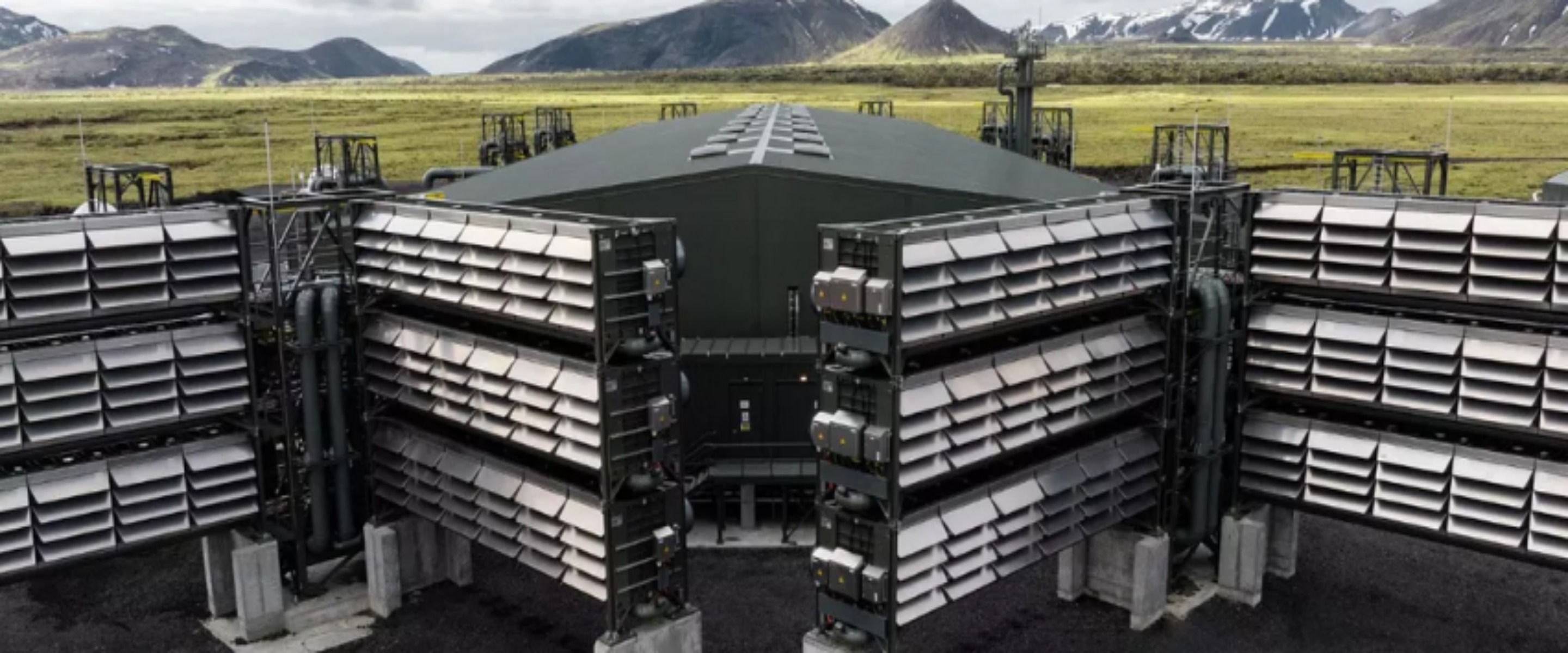
Occidental Petroleum has confirmed that its direct air capture (DAC) facility in West Texas will begin operations by the end of 2026, becoming the largest carbon-removal plant in the world once it comes online. The project, which has faced delays and uncertainty over its timeline, represents one of the most closely watched tests of whether engineered carbon removal technology can scale from demonstration projects to genuinely industrial volumes. The launch comes at an interesting moment for the removals market: companies are stepping in to support the sector's development, for example, Google recently opened more than $6 million in R&D funding aimed at unlocking carbon removal at gigaton scale, and companies like Frontier Infrastructure Holdings and Carbonfuture have signed some of the largest carbon removal offtake partnerships to date.
| Business Impact For companies with long-term net-zero commitments that include durable removals, as opposed to relying exclusively on avoidance or reduction credits, the Occidental plant is a milestone worth tracking closely. A large-scale DAC facility coming online could begin to ease the current supply constraints that have kept removal credits scarce and expensive, potentially opening up new sourcing options for corporate buyers over the next few years. Businesses building removal credits into their net-zero roadmap should watch both signals together: growing supply from projects like this one is a positive sign for long-term availability and pricing, but the market's demand side remains less predictable, and buyers may want to lock in offtake agreements or long-term purchase commitments sooner rather than later if they want price and supply certainty for high-quality removal credits. |

BetterExplained: What is Scope 3?
The 90% of Your Footprint You Don't Control
Most companies size up their carbon footprint using Scope 1 (emissions from their own operations) and Scope 2 (emissions from the electricity they buy). Together, these feel manageable: you can measure them, set targets against them, and directly act on them.
But for the vast majority of companies, Scope 1 and 2 are a small fraction of the real story. Scope 3, everything upstream and downstream in a company's value chain, routinely accounts for 70-90%+ of total emissions for most industries. It covers 15 different categories, from purchased goods and business travel to, on the downstream side, the use and end-of-life of the products a company sells.
Why is it the hardest, but most important category
Scope 3 is difficult for a simple reason: it isn't your data. It's your suppliers' factories, your customers' behavior, your logistics partners' fuel choices, all those emissions that happen outside your control, often outside your visibility entirely. Measuring it usually means relying on industry averages, supplier estimates, or forecasted assumptions rather than a meter you can read.
That difficulty is exactly why many companies have historically under-reported or deprioritized it. It's also why it's becoming the center of gravity for climate regulation and scrutiny: frameworks like CSRD and the SBTi's Net-Zero Standard increasingly expect full value-chain accounting, not just the parts a company can easily control.
If your company buys electronics, materials, logistics, or virtually any input at scale, a meaningful share of your real climate impact is sitting in your supply chain and in how your own products get used after they leave your hands, not in your own operations.
The developments in this edition reflect a market that is moving fast, and rewarding the businesses that move with it. If any of this week's stories raised questions about your organization's climate strategy, carbon commitments, or regulatory exposure, CarbonBetter is here to help you work through them. Get in touch with our team and let's talk about where you stand. And if you found this briefing useful, subscribe to our weekly newsletter with the same analysis, business impact guidance, and the sustainability insights your team needs to stay ahead, directly into your inbox.