Edition #4 | Your Sustainability Team’s Weekly Briefing

Get This in Your Inbox Every Week.
Like what you read? Get it delivered. Every week, our newsletter brings you the same business-focused sustainability briefing, straight to your inbox. Subscribe below and stay ahead.
Estimated reading time: 7 minutes
Climate Obligations · Scope 3 Disclosure · Net-Zero Accountability
Welcome to your weekly sustainability briefing, we’re glad you’re here. This week, we’re covering three developments that are relevant for businesses worldwide. The International Court of Justice has ruled that climate inaction breaches international law, putting pressure on governments to translate that obligation into tighter domestic regulation. New research confirms that net-zero targets are not reliably delivering near-term emissions reductions, and that the gap between a commitment and a credible plan is becoming harder to ignore. And with Scope 3 disclosure rising fast but data confidence stuck at 45%, the shift from voluntary to mandatory reporting is exposing a quality problem most organisations haven’t solved yet. Here’s what it all means for your team.
Story #1: The Climate Crisis Is Now a Legal Matter
The World Court’s ruling that climate inaction breaches international law
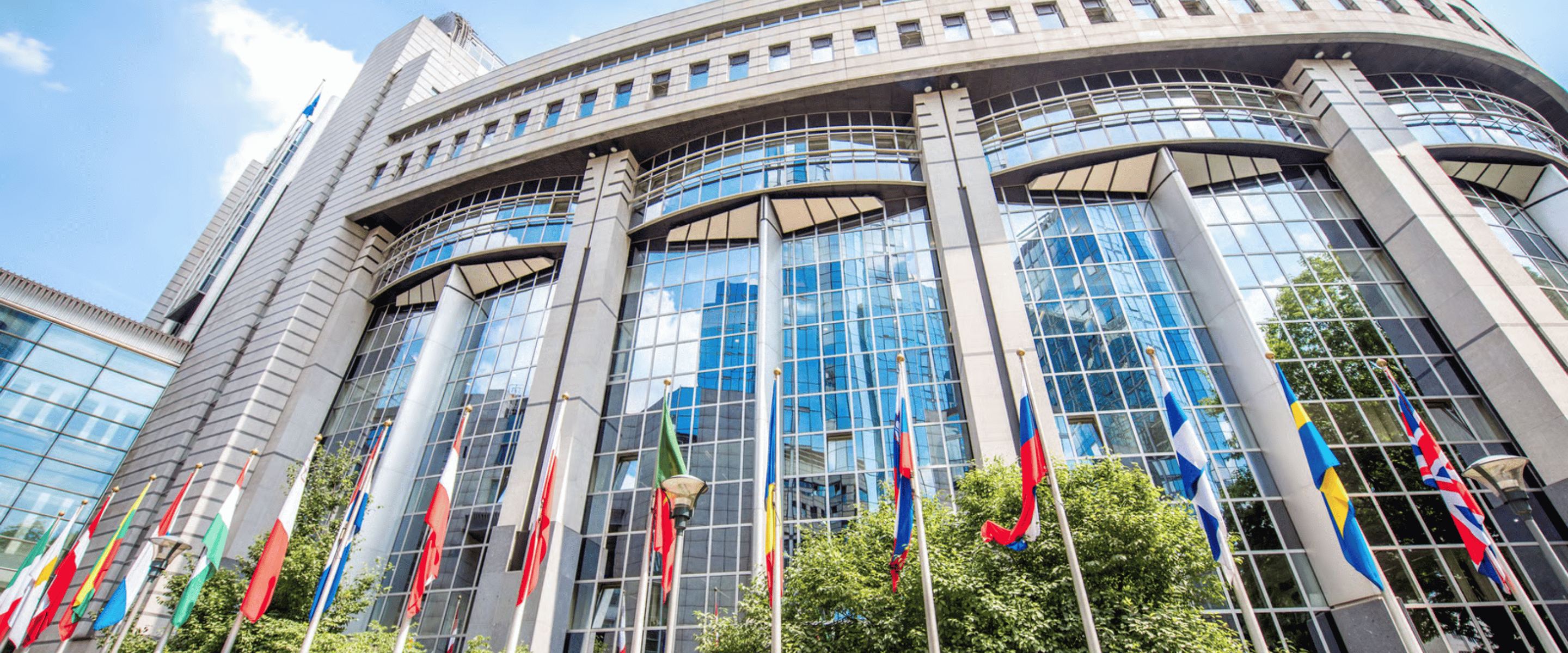
When the International Court of Justice ruled in July 2025 that states have a legal obligation to protect the environment from greenhouse gas emissions, the decision was widely described as a breakthrough. Last week, that ruling was formally endorsed at the highest level of international governance. The UN General Assembly adopted a resolution affirming that tackling the climate crisis is a legal duty under international law, not merely a political choice. The resolution passed with 141 votes in favour, 8 against, and 28 abstentions.
The ICJ ruling stated that if states breach their climate obligations, they may be legally required to halt the wrongful conduct, provide guarantees it will not recur, and make full reparation. Although the advisory opinion is not technically binding, it carries significant legal and moral authority in shaping international law.
The resolution calls on all UN member states to take all possible steps to avoid causing significant damage to the climate and environment, including emissions produced within their borders, and to follow through on their existing commitments under the Paris Agreement.
| Business Impact For most companies, the immediate legal exposure is indirect, the ICJ ruling targets states, not corporations. But that framing understates the real risk. Governments that voted in favour have now accepted, on the record, that climate inaction is a legal breach. That creates political pressure to translate obligation into domestic policy: tighter emissions caps, mandatory disclosure requirements, and stricter scrutiny of corporate climate claims. For companies with net-zero commitments, the resolution also raises the bar for what counts as credible action: a target without a credible transition plan is now increasingly difficult to defend, legally or reputationally. What Businesses Can Do: • Review your organisation's exposure to jurisdictions that voted in favour of the resolution. Assess whether existing transition plans would withstand increased regulatory scrutiny. • Map which elements of your climate strategy depend on political goodwill rather than defined legal requirements, begin by identifying where mandatory requirements may follow. • Be informed on the legal trajectory; the ICJ opinion is non-binding today, but it is shaping the framework within which future regulation will be designed. • Sectors with large Scope 1 and 2 footprints (energy, manufacturing, transport, and agriculture) face the most direct exposure, and should be further along in their preparation before regulation catches up. |
Story #2: The Scope 3 Confidence Problem
Disclosure is rising fast, data quality isn't keeping the pace.

Sphera's 2026 Scope 3 Report, based on a survey of 1,034 sustainability leaders across 15 industries in EMEA, APAC, and the Americas, found that voluntary Scope 3 disclosure has risen to 73%, up from 49% in 2024, and that 80% of respondents say recent regulatory changes have accelerated their sustainability reporting.
But the confidence picture is considerably less encouraging as 45% of business leaders report having only limited confidence in the accuracy of their Scope 3 emissions data, and the data needed to calculate Scope 3 is scattered across spreadsheets, supplier portals, ERP systems, product databases and logistics systems.
89% of organisations are planning to expand Scope 3 reporting in the future, and 47% plan to apply AI to supply chain risk assessment, but 45% worry about data quality limiting the effectiveness of those AI tools.
Business Impact A large and growing proportion of corporate Scope 3 disclosures are built on estimates, spend-based proxies, and supplier data that hasn't been independently verified. That was tolerable when disclosure was voluntary and largely unscrutinised. It is significantly less tolerable when those same figures appear in mandatory CSRD filings, California SB 253 reports, or SBTi target submissions, all of which are either live or imminent. A rising standard is coming for emissions data, and companies need to build the supplier engagement and data infrastructure to support it. What Businesses Can Do: • Conduct an honest internal audit of your Scope 3 data quality. For each material category, ask: is this primary data, a spend-based proxy, or an estimate? What could you defend in a mandatory filing or an investor challenge? • Prioritise supplier data collection for your highest-emission categories; typically purchased goods and services, upstream transportation, and use of sold products. • Address Scope 3 data quality strategically. The shift from voluntary to mandatory disclosure means the standard of evidence required is changing, and the liability for inaccurate reporting is responsability of the company, not the supplier. • Review the requirements under CSRD and California SB 253. Understand what your current data quality could and could not support. |
Story #3: Having a Net-Zero Target Is Not the Same as Reducing Emissions
Corporate climate commitments aren't delivering the near-term emissions cuts the science requires.

New analysis published by CEPR examined whether firms adopting net-zero targets subsequently reduce emissions or strengthen climate governance. The researchers found only weak evidence of immediate emissions reductions, but firms with net-zero targets appear more likely to adopt forward-looking strategic management practices.
The study concludes that net-zero targets appear to formalise transition processes already emerging in firms with relatively strong climate governance, but are not reliable indicators of near-term emissions performance.
The authors combine broad commercial emissions data with sector-specific emissions intensity measures to address the challenge that corporate emissions data is often noisy and incomplete, particularly for indirect emissions occurring across supply chains and product use.
| Business Impact This research provides external validation that the proliferation of targets has outrun the operational changes needed to meet them. For companies that have announced net-zero commitments without a credible transition plan, this evidence will increasingly be used by investors, regulators, and litigants to challenge the credibility of those commitments. It shifts the strategic emphasis from target-setting to execution, from announcing what you will do to demonstrating what you are doing. In a regulatory environment where mandatory disclosure is expanding (CSRD, SB 253, SBTi V2) and legal frameworks are hardening (see Story 1), the distinction between a target and a credible transition plan is becoming more important. What Businesses Can Do: • Review your net-zero or climate targets against what your organisation is actually doing. Is there a credible, resourced plan behind the commitment? If the answer is uncertain, it's worth looking into. • Assess whether your climate commitments have been adequately communicated to investors as aspirational targets vs. operational deliverables. • Use this research as a prompt to shift internal focus from target-setting cycles to emissions performance tracking. The question boards will increasingly ask is not "do we have a target?" but "are our emissions actually going down?" • Review any public climate claims in light of this evidence. Claims built on target announcements rather than demonstrated progress carry increasing greenwashing and litigation risk. • Where targets exist, ensure there is a published transition plan behind them, with milestones, accountability, and a budget. This is increasingly what investors, regulators, and counterparties will expect to see. |
The developments in this edition reflect a market that is moving fast, and rewarding the businesses that move with it. If any of this week's stories raised questions about your organization's climate strategy, carbon commitments, or regulatory exposure, CarbonBetter is here to help you work through them. Get in touch with our team and let's talk about where you stand. And if you found this briefing useful, subscribe to our weekly newsletter with the same analysis, business impact guidance, and the sustainability insights your team needs to stay ahead, directly into your inbox.